
Dispatch · December 23, 2025 · 6 min · By Odette Brankovic
Implants over vs. under the muscle
Placement affects look, feel, and recovery, here is the trade-off.
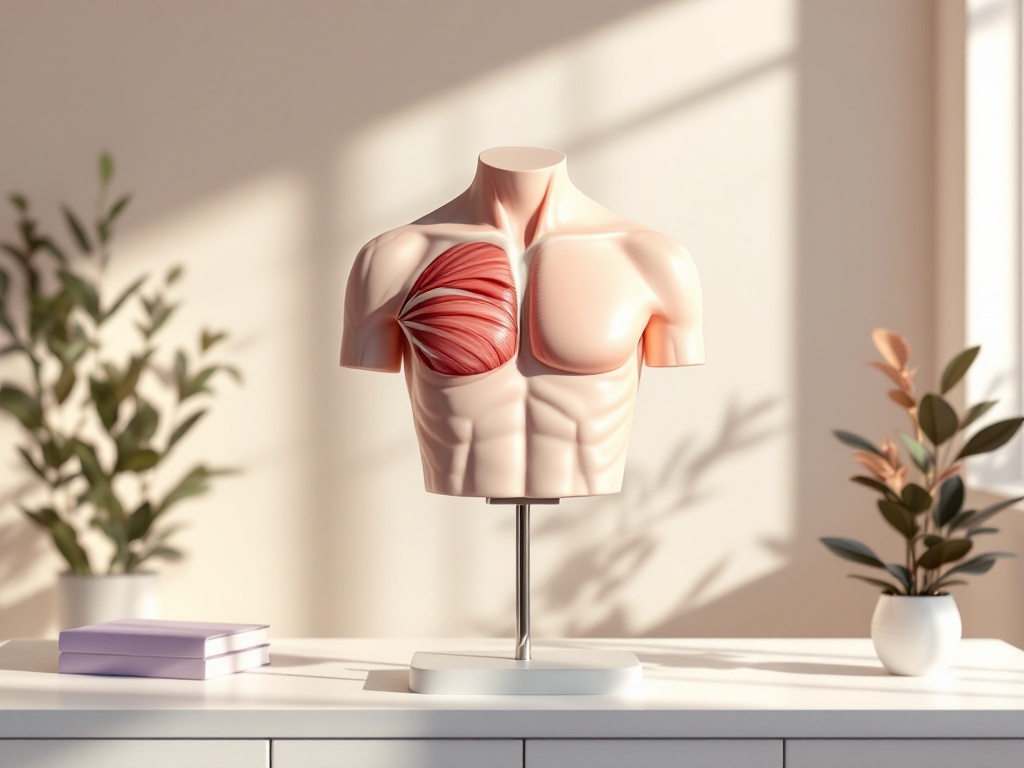
Where the implant is placed relative to the chest muscle, over it (subglandular) or partially under it (submuscular), is a meaningful decision that influences the result, and the right choice depends on your anatomy.
Submuscular placement, with the implant partly beneath the chest muscle, tends to give a more natural slope in the upper breast, lowers the risk of visible rippling and of the implant edge showing in thin patients, and may interfere less with mammograms, at the cost of a somewhat longer, more uncomfortable recovery and the possibility of slight movement of the implant when the muscle flexes. Subglandular placement, above the muscle, can offer an easier recovery and suits some patients with more existing breast tissue, but carries a higher chance of visible or palpable implant edges and rippling in thinner patients.
The decision hinges largely on how much natural breast tissue and soft-tissue coverage you have. Patients with thinner tissue usually benefit from submuscular placement for better camouflage, while those with more tissue have more flexibility. A surgeon weighs your coverage, the implant type, and your goals to recommend placement. As with most augmentation choices, there is no universally superior option, only the one that best fits your anatomy, which is exactly the kind of individualized judgment a thorough consultation provides.
Related reading: Life with breast implants: maintenance and longevity and Skin quality, scars, and healing after augmentation.